That’s Not Love Peko Watanabe Interview
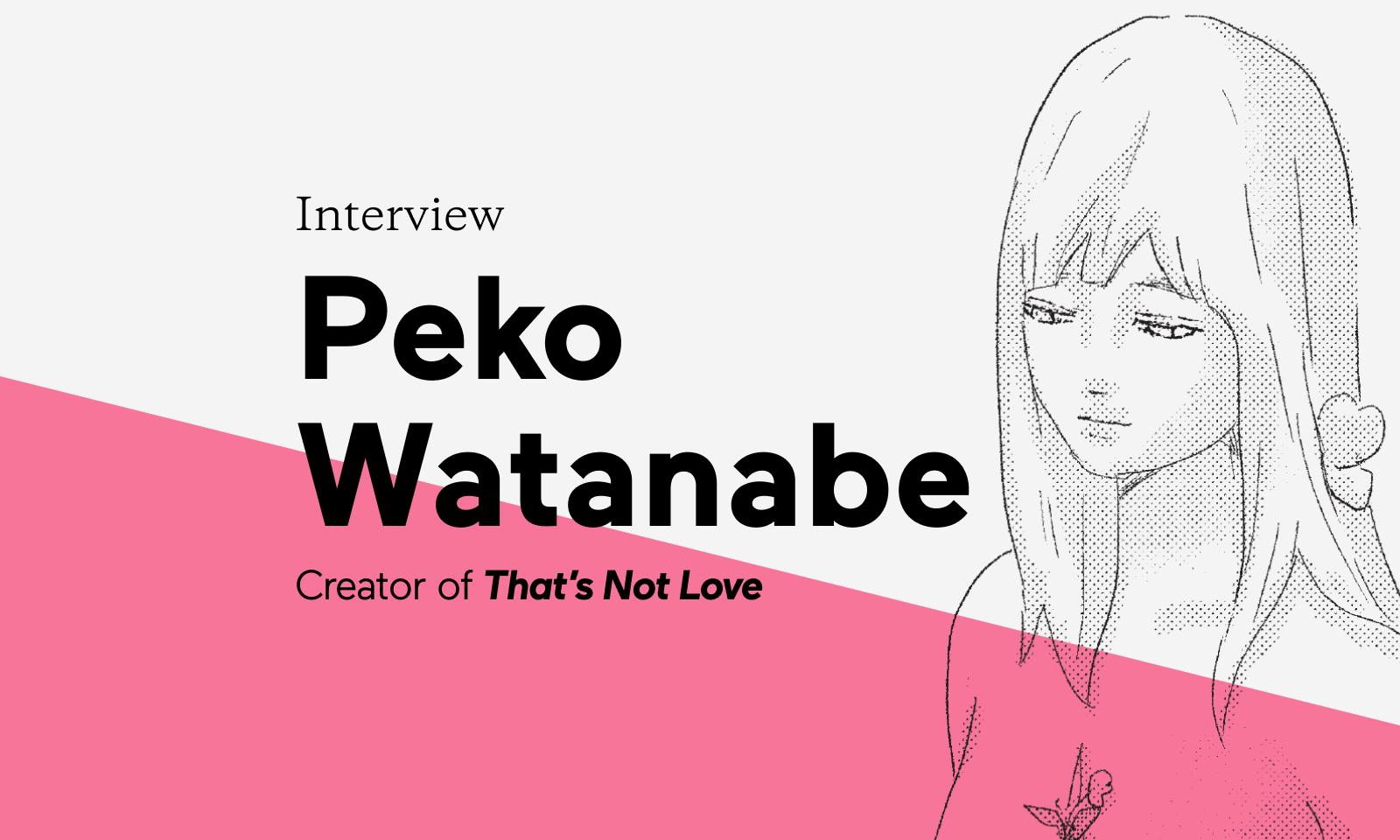
That’s Not Love By Peko Watanabe
Creativity and Romance Aren’t Special Exemptions—Turning the Tables on Twisted Oppression
With a discerning eye, the manga artist Peko Watanabe sheds light on issues and incongruities we experience in today’s society such as with 1122: For a Happy Marriage, which has sold over 2 million copies. In her new series That’s Not Love serialized on the online manga magazine Morning Two, Watanabe confronts the themes of “creative expression linked with sexual assault” and “the abusive brutality of romance” head-on. In this interview, we asked Watanabe about what inspired the work and her thoughts behind the story. (Written by Shuko Yokoi)
Overview
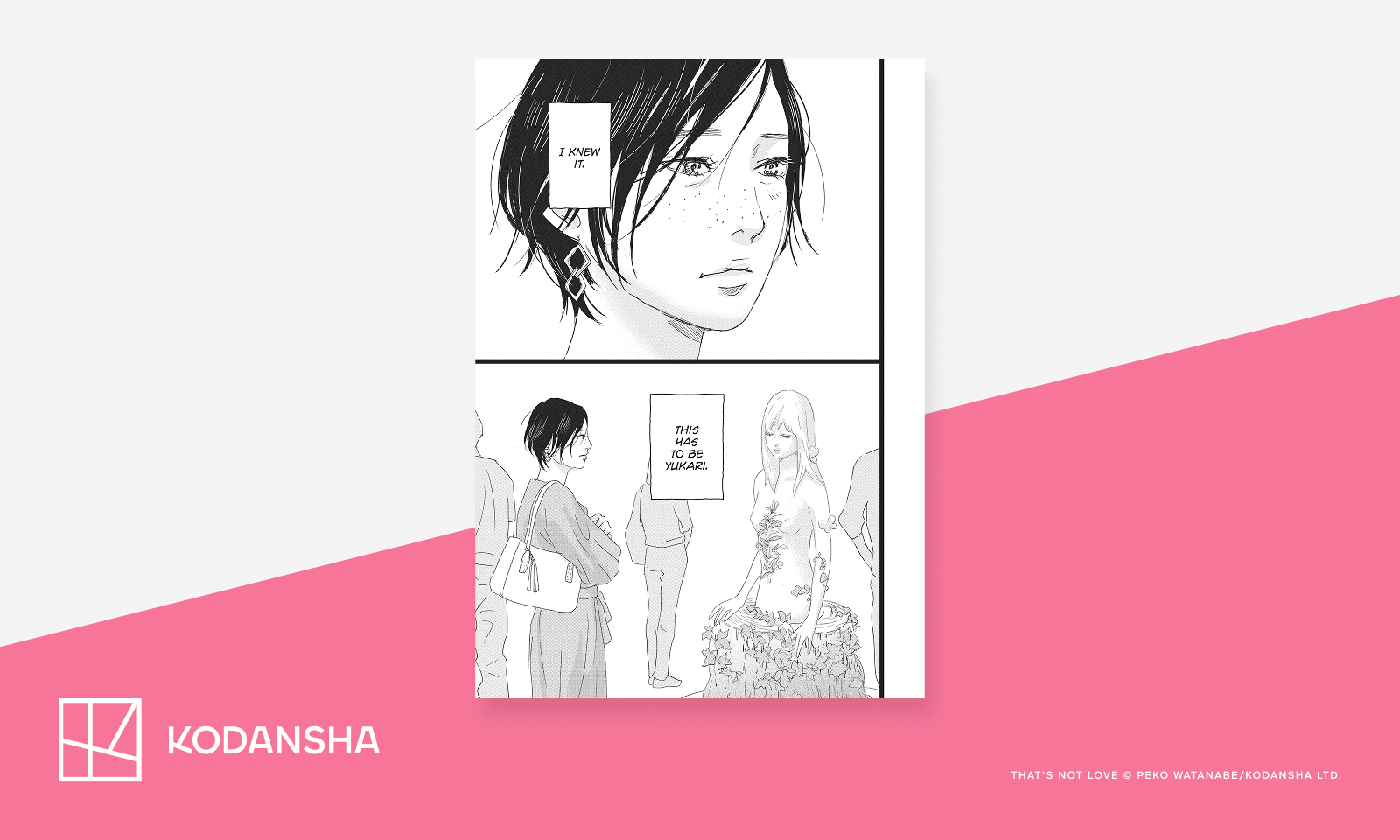
One day, 40-year-old housewife Akane discovers that Mr. Imai, a cram school teacher from back in middle school, is now a celebrated sculptor. His sculpture of a girl looks suspiciously like Akane’s former best friend Yukari, and memories from 26 years ago come rushing back. When the girls were still 14, Yukari and Imai had been in love despite him being her teacher…or so it seemed at the time. The three of them now lead completely separate lives, but a nude photo of Yukari that Imai took resurfaces and their paths cross once more. This is the story of confronting the mistakes and regrets from the past that never got addressed.
The Two Core Concepts—Systematic Sexual Abuse and Sisterhood
—When I first read That’s Not Love, it brought to mind a number of incidents. There was the 2017 #MeToo movement in response to sexual abuse by the formerly powerful Hollywood producer Harvey Weinstein, as well as the 2018 confession by former model KaoRi, who was known as a “muse” to photographer Nobuyoshi Araki. Did the idea for your story originate from those kinds of real-life examples?
The idea didn’t just originate from real-life incidents. There was an indistinct feeling of unease and frustration that gradually grew inside of me over the years. Of course the #MeToo movement was a factor, but the model’s confession that you just brought up was a particularly big influence. When I was in university, Araki was a star in contemporary art and there was an unspoken understanding that, although some of his work was edgy, it was important to comprehend its artistic value. No one explicitly said so, but I understood that reacting with shock at his photos showing women in bondage would be considered very crass and tasteless. But when a shift in value judgement happens in society, an artist’s position can change, along with how their work is viewed. This does seem to be the case, seeing how people recognize that a problem is awful once it comes to light, even if the problem was tolerated until then, with some knowing what was going on to some extent.
Another thing was a semi-documentary film that I personally enjoyed and even wrote commentary for. I found out that one of the male actors had been a victim of coercion. Not only had I enjoyed the film, I had actively recommended it to others. I had been naïve and hadn’t realize what was going on at all. Even after finding out, I didn’t take the victim’s words as seriously as I should have and remained a consumer for a time. That’s a source of deep regret.
From there, I started thinking about various issues—situations where abuse isn’t recognized for what it is, problems that are tolerated for the sake of art or talent, and hierarchies that form within small groups or industries where everyone tends to know each other, among other things. While I’m not a fine artist, I do creative work that I publish, so it was an issue that I cared about on a personal level as well.
—How did those ideas come together as a story?
When art is involved, the problems are less visible and there’s a general unwillingness to question such issues. But I think that we as a society also contribute to creating that atmosphere. We’re responsible for providing the excuse that artists are special, and therefore, exempt. I wanted to think properly about how that happens systematically, and make sure I never forget it.
Separate from my thoughts on sexual abuse, when I was still working on my previous series 1122 that focuses on marriage, a desire to feature middle-aged women for my next story started to well up inside of me. I wanted to depict a kind of sisterhood. I don’t have what it takes to write a legal drama about pressing charges in court, but when I thought about systematic sexual abuse and the bond between two women, I thought I might just be able to make a story out of those two core concepts.
To Step Away From a Schematic Way of Thinking
—What made you want to feature middle-aged women?
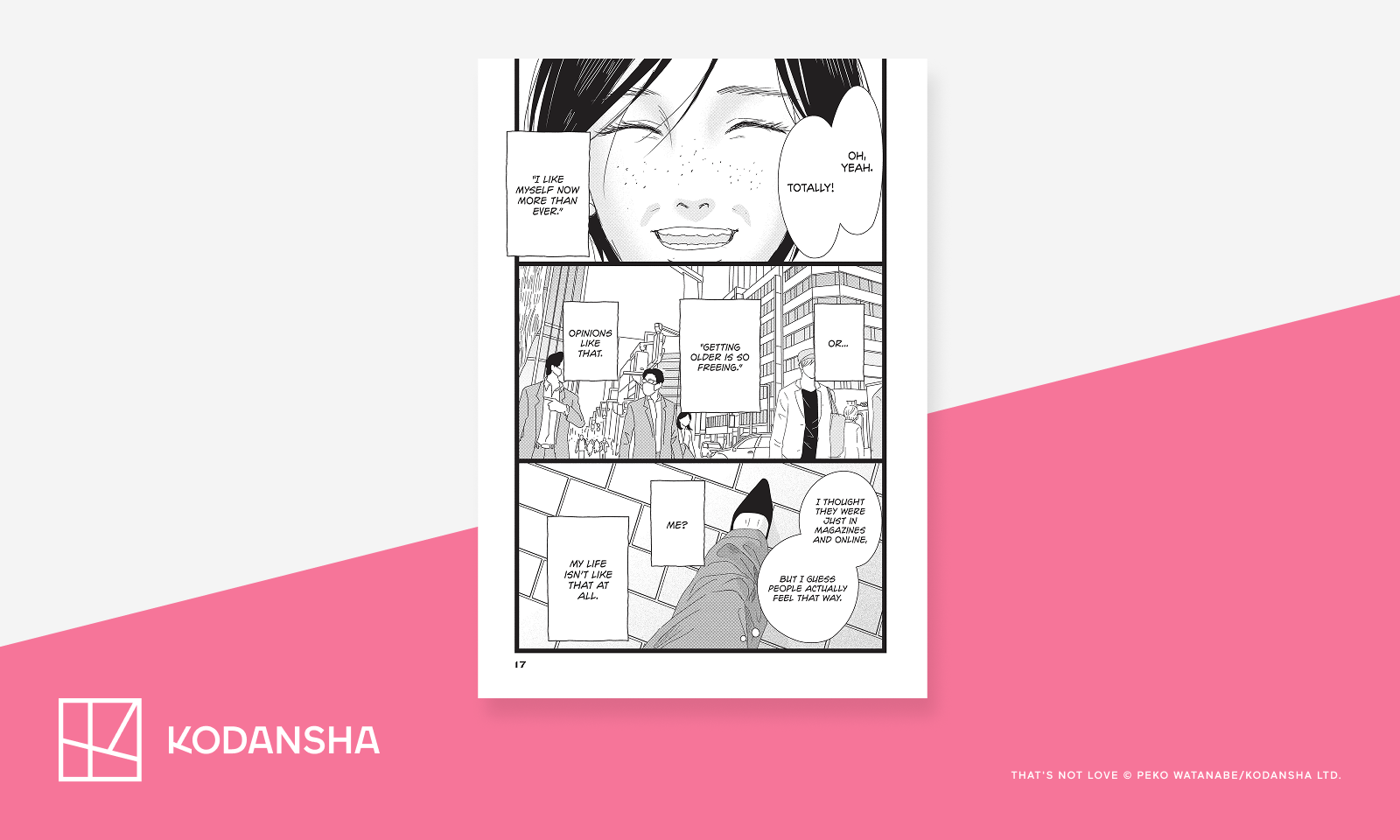
In the last several years, I have seen the phrase “life gets easier as you age” as a way of empowering or encouraging women. From experience, I understand the feeling that aging is not a bad thing, and a part of me does want to tell younger people that this is true. Still, the situation can vary by person and I thought it was important to remember that it’s not true for everybody. I just don’t think schematic representations like “age = ease” or “women = [some stereotype]” make sense.
—Right in the first chapter of That’s Not Love is a scene where some old friends of Akane’s are saying things like, “I like myself better now than when I was younger,” and “Your forties are much more liberating and fun,” and Akane feels forlorn deep inside because she can’t relate.
Draining things are still draining no matter how much you age. I’m 45 years old now, and I used to think that at this age I would be more mature, regardless of whether I was married or had children. But when I actually hit my forties, I wasn’t the wise middled-aged woman I thought I would be. I was still just as immature as I had always been. This is nothing new and it’s a common topic, but I wanted to depict that in my own work, too.
—Akane harbors guilt that she never responded to Yukari’s cry for help when they were fourteen. When they reunite 26 years later, both have changed in some ways but not in others. They have carried their issues but a part of them has grown up, too.
With time and distance apart, people change. You can’t hope to rebuild a relationship exactly the way it was before, but from personal experience I’ve found that it’s sometimes possible to reconnect in a slightly more mature, mindful way. Akane and Yukari hadn’t seen each other for years, and they live far apart. But even if they haven’t been together all this time and there is a physical distance between them, some relationships can continue with genuine concern for each other. I hope to depict that in this series.
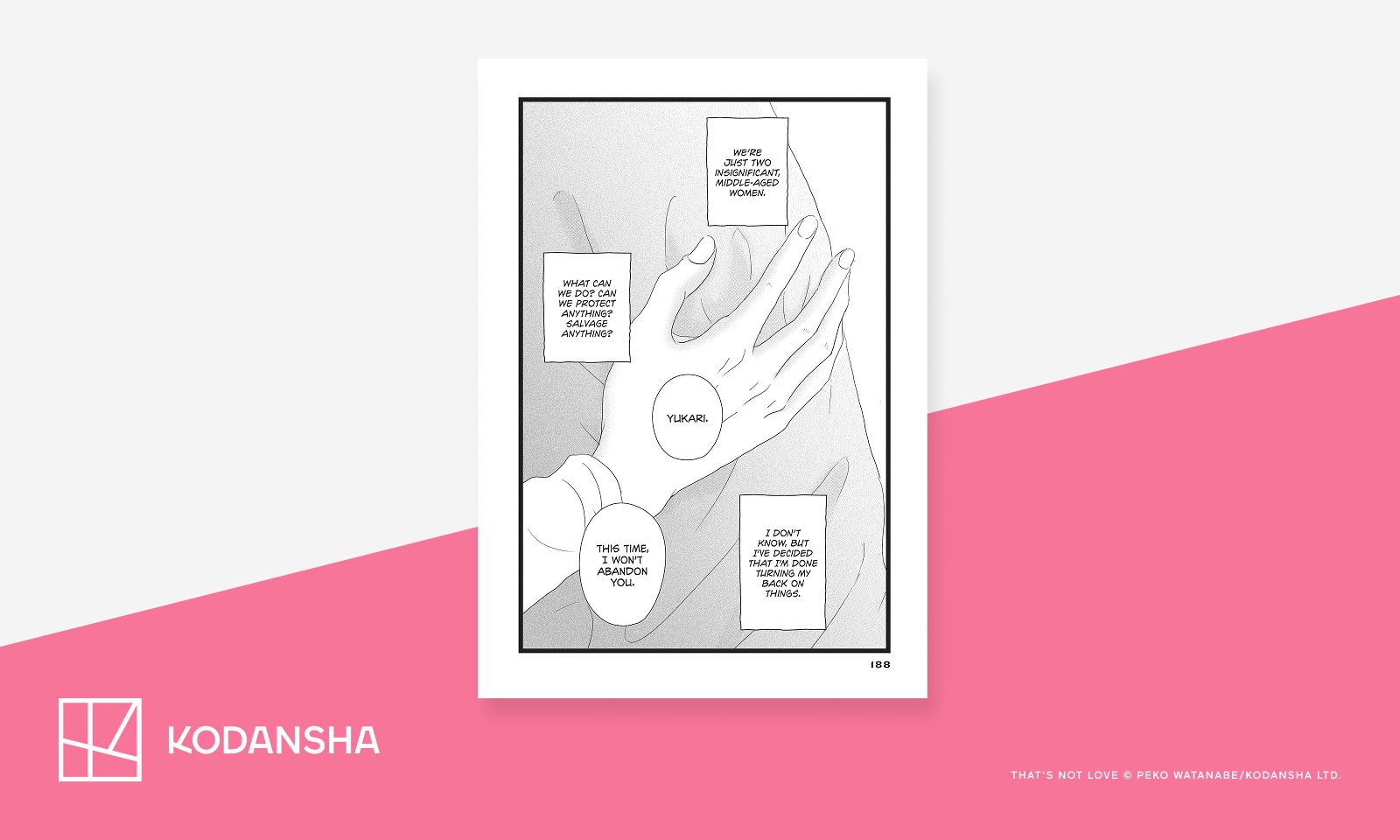
—I see a kind of solace in Akane’s resolve to not turn her back this time and the story about the two women’s friendship.
Same-gender friends who get along are more often than not depicted as having very similar mindsets, sharing experiences and emotions in real time with mutual understanding. Personally, I struggle with that kind of closely knit friendship. So I thought in the same way that romance can come in many different forms, maybe it’s okay for there to be a spectrum in friendships, from really intimate to much more mellow.
—There are problems depicted within their respective families, too, including some that are not explicitly apparent but are nevertheless there. Friendships can sometimes provide another place where you feel you belong that’s separate from your home.
Of course, the family you’re born into is different from the family that you build for yourself, but perhaps because I grew up in a home where I was subjected to some pretty unreasonable things, my sense is that having an immature adult in the house is kind of a given. For example, with Yukari or Beniko’s family, I don’t intend to portray them as abnormal or awful homes at all. I think of them as very ordinary families that could exist anywhere. In any family, the roles tend to get fixed as the wife, the husband, the parent, or the child. That kind of “packaging” of the concept of family inevitably gets my guard up. As the slang term “parent gacha”* indicates, what kind of family you’re born into is up to chance, 100%. So I didn’t want to put too much weight on that aspect. Friendship comes in many forms, but I think it’s important that there are no fixed roles between friends.
[Footnote] *”Parent gacha” originates from capsule “gacha” machines where you don’t get to choose what toy will come out of the capsule. The idea is that what kind of parents one might get is up to the luck of the draw, and one might have “won” or “lost” depending on what the family situation is like.
Manga and Lookism
—Lookism, which is about making judgments or discriminating based on physical appearances, is another running theme in That’s Not Love.
I think about looks a lot. As I age, worrying about my appearance has largely gotten easier, but it’s definitely not the case that I can say with 100% certainty that it doesn’t affect me anymore.
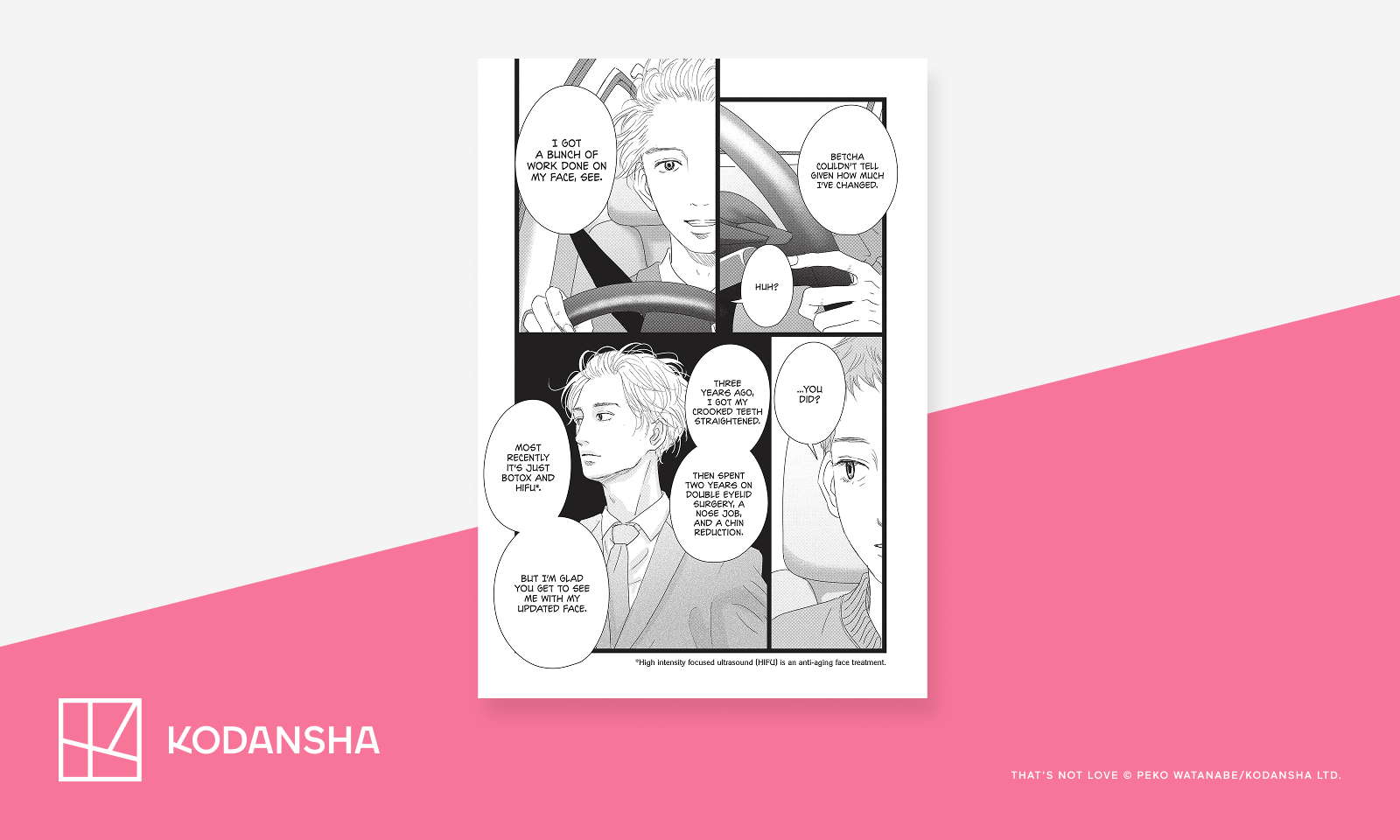
—Yukari’s character has a perspective that seems removed from lookism. When Akane self-deprecatingly jokes that she’s a “fat gorilla,” Yukari doesn’t even crack a smile and denies it. She also doesn’t notice Gen’s cosmetic surgery.
That’s true. In this manga, there’s a juxtaposition between people who found it necessary to change their looks versus those who didn’t need to. In Akane’s case, it’s about losing weight. I imagine she went on a diet because it wasn’t acceptable for her to be a bit pudgy or have a thicker physique. Yukari now cuts her hair and has changed the way she dresses to eliminate feminine traits as much as possible. Gen wanted to pursue his idea of attractiveness and changes his face through surgery. Only Mr. Imai, who became a sculpture artist, is able to age without having to change anything.
—Although I do think everyone has the right to choose their appearance, I also feel like Mr. Imai is very privileged compared to the other three, who have all had to struggle with their looks in one way or the other.
Mr. Imai is the only one who gets to stay the same person he has always been. Personally, I think cosmetic surgery is a perfectly viable option. But I also think there tends to be more stories about women getting enhancements, so I knew I wanted my character to be male. That’s how Gen’s character came about. Since some themes of the story are heavy and both Akane and Yukari have quieter personalities, I knew that the mood would be subdued in general. So I wanted to include a character who was uplifting and didn’t worry much.
—It’s true, it’s always a relief when Gen appears. Especially since he’s one of the characters who reaches out to help Yukari.
It’s not just in the story. I also consider all kinds of things about appearances when drawing manga. For example, the majority of manga depict women with bigger eyes and men with sleek ones, which is true in my work as well. I think that’s because there’s a general image that big, wide eyes look prettier on women. I actually wish I could draw eyes the same way regardless of gender, but with my drawing skills it makes differentiating extremely difficult for the reader. So, I follow those conventions to some extent while trying to get as close to my ideals as possible, but even as I draw, I always find myself just making the women’s eyes bigger. By default. [laughs] I know it’s just a conventional way of “coding” characters, but I’m also exacerbating the issue by mass producing it. At this point, I can’t help but wonder if it’s not that different from makeup.
—I suppose with manga, you do have to code your characters to some extent to show what kind of people they are, so maybe it’s easier to notice social conventions on appearances.
I can’t escape that kind of coding completely, but I don’t condone lookism, either. I guess that’s why I wanted to touch on that discrepancy I feel in my manga.
Romance Doesn’t Mean Anything Goes
—Mr. Imai creates a sculpture based on a younger Yukari, and although he does apologize, he still refuses to take down the exhibition despite Yukari’s protests. Meanwhile, he leaves the rebuttal completely up to his wife. He seems almost hollow inside, but also quite realistic.
For an artist or an author, expressing themselves is part of the job and they are making a living off of it. And yet, when incidents of violence or abuse come to light, many of them suddenly turn silent, which always bothered me. Like when they say, “I’m leaving it all up to my lawyer,” or “I have nothing to say.” I’m sure they have their reasons, but still. They express themselves so much through their work, and I have to wonder why they suddenly fade away like they’re invisible the moment some inconvenient truth comes out. Still, having a character stick to that in manga will really just result in a hollow personality, so I keep thinking I have to make Mr. Imai voice his thoughts and tell his side of the story at some point.
—What are you conscious of when depicting Mr. Imai, who is the abuser in the story?
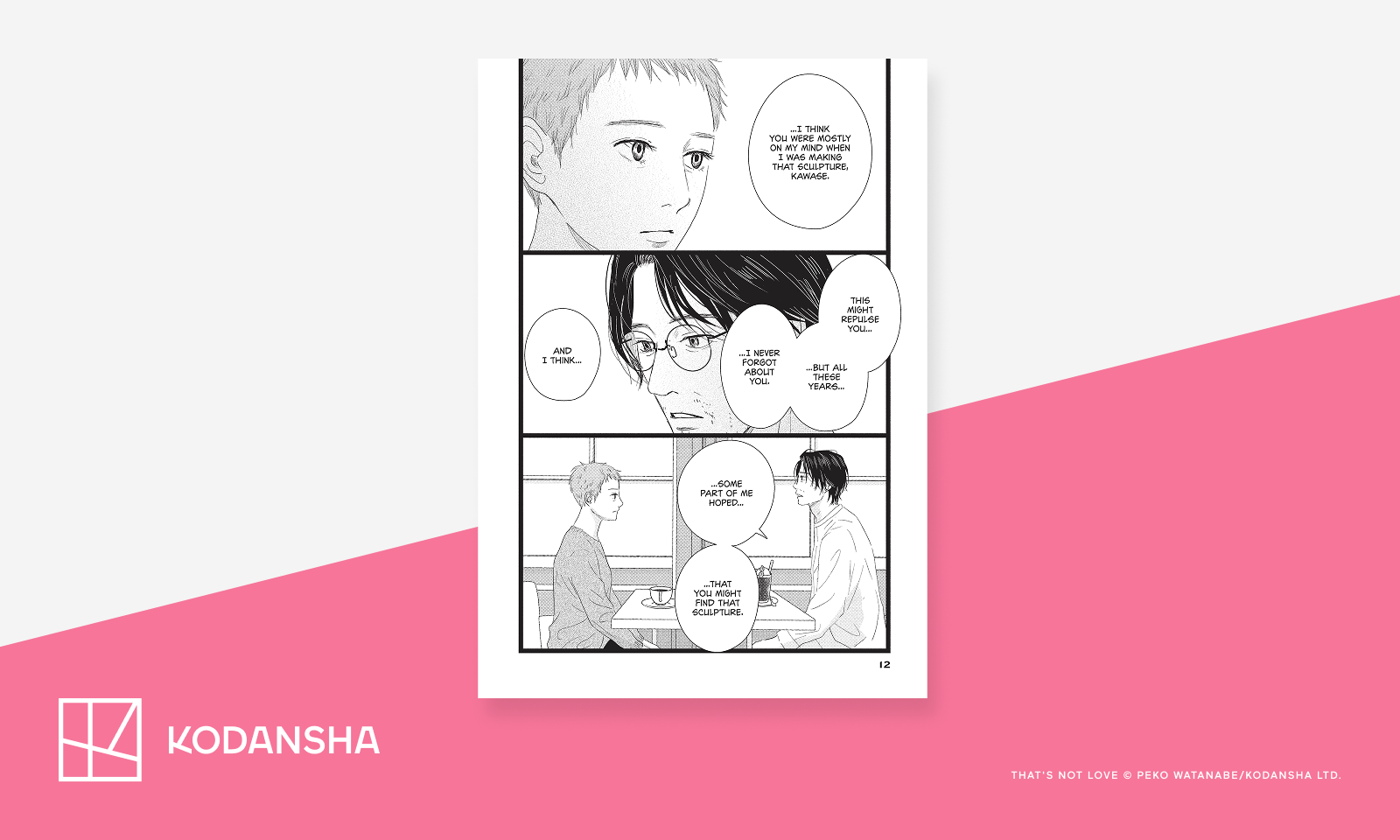
I didn’t want him to seem clearly capable of sexual abuse, or present him as an obvious villain. In line with many real-life abusers, Mr. Imai has created a convenient fantasy of a legitimate relationship in his mind, including the belief that the girl gave consent, or at the very least, didn’t reject him outright.
Mr. Imai’s abuse doesn’t involve violent sexual assault, which makes it more sinister in a way, because he can be as slippery as he wants and get away with it. The idea that “they were in love” or that “it was a romantic relationship” tends to be used to excuse such behavior. An abuser saying, “I couldn’t help it because I was in love with you at the time,” makes things very difficult for the victim. But just because a relationship might have some romantic feelings involved shouldn’t mean anything goes.
—I see, so that’s the kind of message you put into the very striking title, That’s Not Love.
I have always questioned whether fiction places too much importance on romance as a positive thing. Love is certainly dramatic and involves big human emotions, so it’s understandable for a creator to feature it. I know I’ve had favorite romantic TV dramas that once melted my heart. But when “love” becomes this miraculous thing that solves everything and anything goes within the confines of romance, I think we need to be wary. In particular, when a story about an adult and a child is depicted as a beautiful love story—with the excuse that the temptation was just too much or that there was a special connection—I gradually found I wasn’t okay with it anymore, even if I may have enjoyed it without a problem before. I understand how it might be used as a storytelling device, but I think it’s important for there to be a lot more work featuring things other than romance.
—Because not all relationships are defined by romance.
Exactly. Not everything is about romance. That’s not love. [laughs] I guess that’s really me talking. [laughs] The sentiment that wells up in the story that “it might not have been love,” and my desire to not make everything about love are both manifested in the title.
A Desire to Turn the Tables on Social Oppression
—I think the anxiety and fear a victim feels toward raising their voice is substantial. A monologue by Akane in volume 2 says, “She wants everyone to forget so she can move on. But what if no matter how much she begs or how much she yells, nobody bothers to listen?” The worry that an insignificant victim’s voice might not be heard is depicted repeatedly in your work.
I think there are many people who feel like their voices go unheard or who have given up after being ignored so many times. I can’t solve any of that, but I do create the manga praying that people will listen and those voices will be heard.
—When Gen’s girlfriend describes the news on a sexual harassment court case as “painful to watch” and wonders whether it might be easier for the victim to just forget about the tough situation and find peace, Gen strengthens his tone and says, “That ain’t peace at all, and you know it.” That was striking as an outsider’s perspective.
I think sexual abuse is often shrugged off with comments like, “at least they weren’t murdered.” In terms of this conversation in the manga, I think both Gen’s and his girlfriend’s comments are plausible. Gen’s just happens to be more sympathetic because he’s closer to Yukari in this scenario. It would become draining attempting to relate to all of the information that comes up on the news or online, so sometimes we have to take a step back for our own well-being. But even if we don’t sympathize with everything, if we all use our imagination and learn about the issues, I think it’s possible to avoid shrugging off problems without a thought.
—You handle some very heavy themes, but many of the issues raised, painful or otherwise, are relatable or at least familiar in a “I’ve seen this before” kind of way, which makes the story read well.
Thank you for saying that. Thinking about readability and entertainment value is really difficult for me. I love entertainment, but I’m actually not great at providing it, even though I’m a manga creator. It’s something I always struggle with through trial and error, with help from my editor. One very important thing is that I don’t want my manga to lecture on morality. It might seem to do that sometimes, but as the author I want people to read it for the story, so I take care not to get too explanatory.
—Finally, can you tell us a little about where the story will go on from here?
Perhaps evident with the scene in 1122: For a Happy Marriage where a man gets stabbed in the genitals with a kenzan (a little bed of needles used to arrange flowers in ikebana), I think I’m impulsively destructive sometimes in my stories. Although it’s entirely unconscious, it seems I have the desire to tear apart sources of oppression. I’m pretty sure I’ve done that kind of thing repeatedly in my works. That’s Not Love is no exception, and I want to turn the tables, as it were. Unfortunately, women are generally weaker than men, both in society and in terms of physical strength. But the desire to flip that script is here inside of me, so I hope you look out for that as the story continues.
—I’ll keep thinking about these issues as I read and look forward to what comes next. Thank you very much.
About the interviewer:
Shuko Yokoi
Manga Journalist
Born in 1978 in Tokyo, raised in Ibaraki Prefecture. Writes about manga. Associate Professor of Literary Arts at the Tohoku University of Art and Design.
No part of this article may be used or reproduced in any manner whatsoever without written permission by Asahi Shimbun.
Permission Number: 26-1728
Interview provided with permission from The Asahi Shimbun Company until July 17, 2027.