Parasyte: Hitoshi Iwaaki’s Psychological Portrait of Humanity—Through Aliens
Featuring Parasyte by Hitoshi Iwaaki
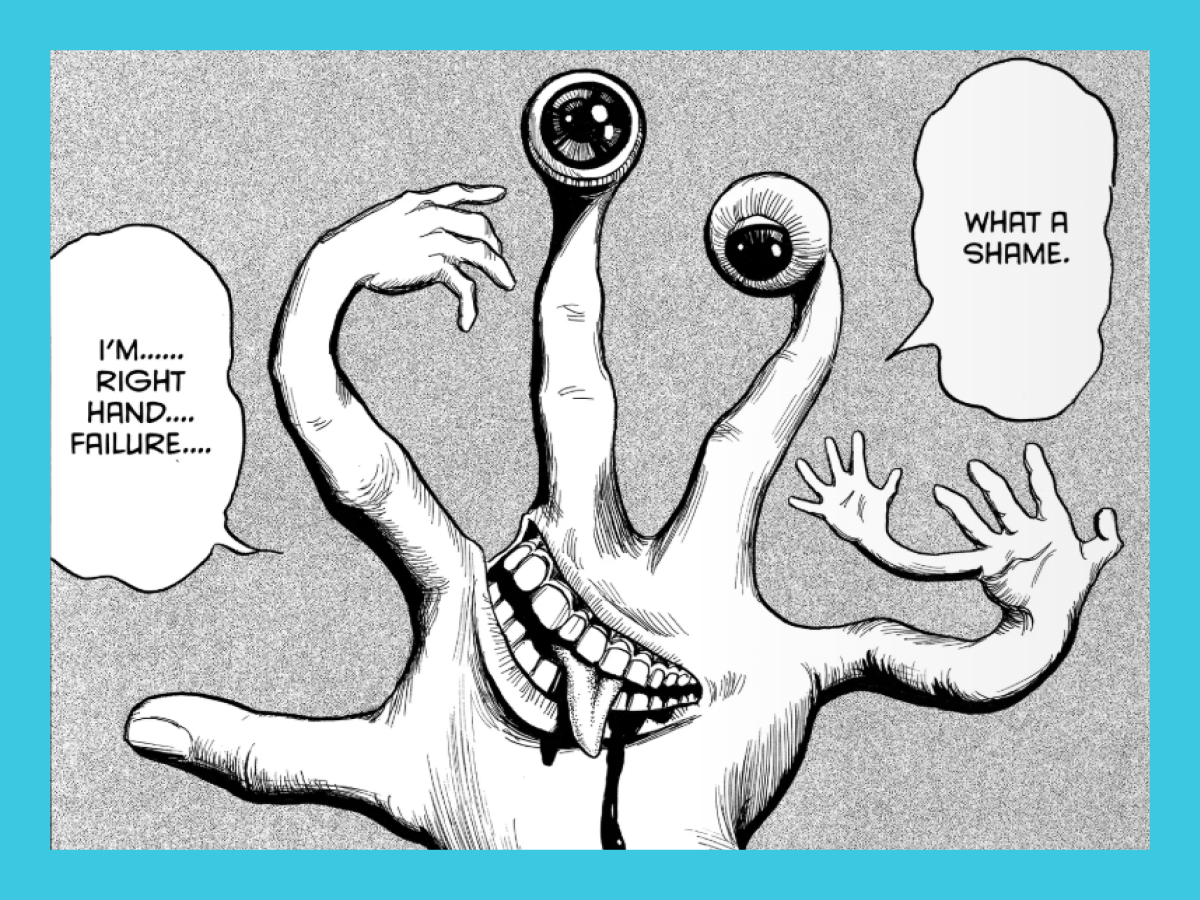
“I used to watch a lot of documentaries about the food chains in nature as a kid. I remember wanting to write about the egotism of the human race over this planet, but I didn’t want to look down on humans. I just wanted to tell the story from an ordinary person’s point of view. I think that was the inspiration behind Parasyte.” —Hitoshi Iwaaki, author of Parasyte, in an interview with Kodansha USA.
There’s a common theory that in order for humans to be able to overcome their differences, they’ll need to meet an Other—like aliens from outer space—that forces them to recognize their similarities. A more pessimistic view is that even if aliens do invade, humans won’t be able to work things out among themselves and will just destroy humanity from within.
Whatever the answer is, aliens are certainly one shortcut to getting people to think about what makes us human.
Hitoshi Iwaaki’s science fiction manga, Parasyte, first serialized in Kodansha’s Morning Open Extra Issue magazine starting in 1989 and then in Afternoon from 1990 until its completion, is one of the shortest series to appear on lists of the most widely circulated manga series of all time. With only 10 volumes and over 25 million copies sold, the series is a compact masterpiece with cross-genre appeal.
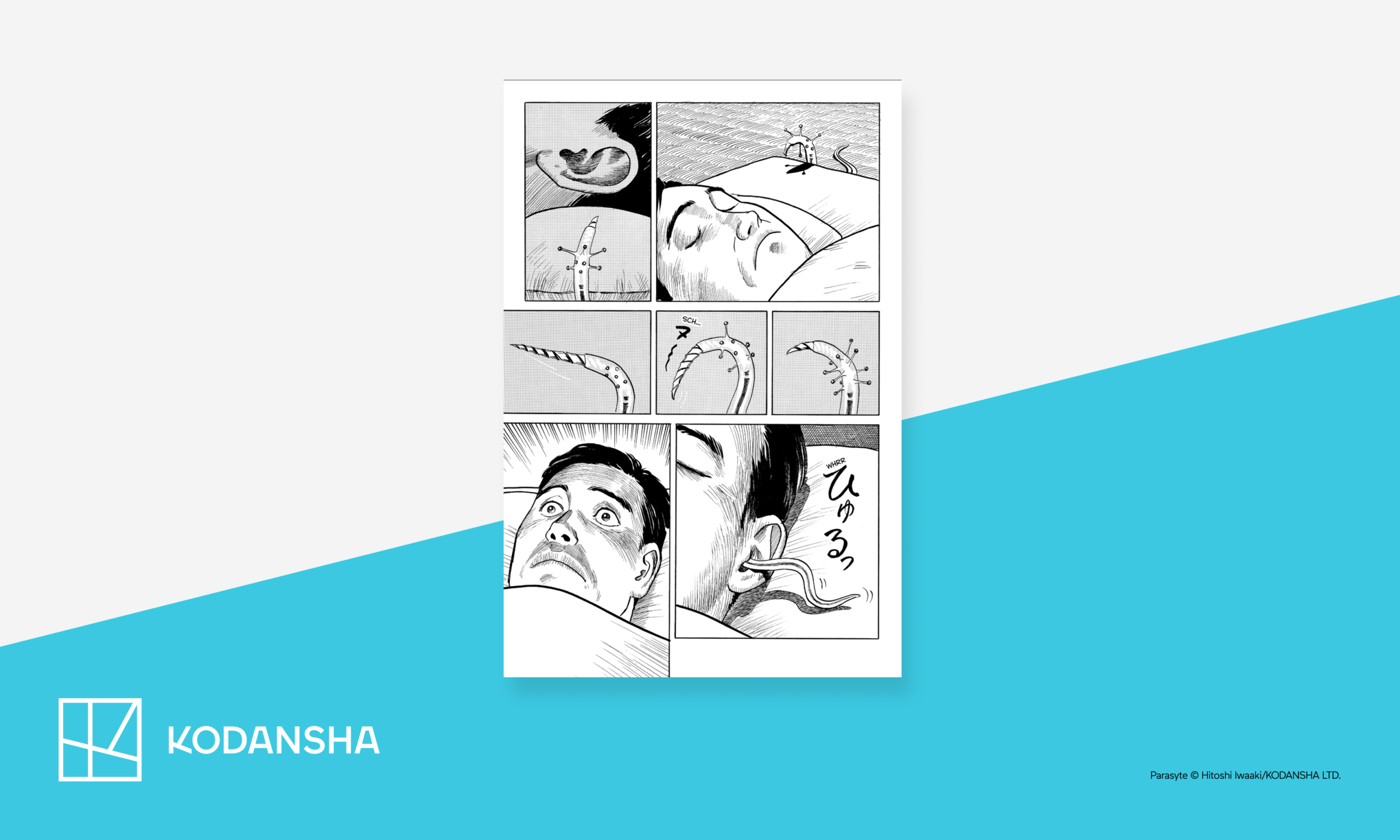
Despite the body-horror aesthetic of Iwaaki’s aliens and the bloody outcomes of their invasion, Parasyte is no horror series. Blending action, psychological thriller, and science fiction with romance, slower philosophical moments, and humor, its no wonder the series remains popular decades after its initial release.
Not Your Average Alien Invasion Story
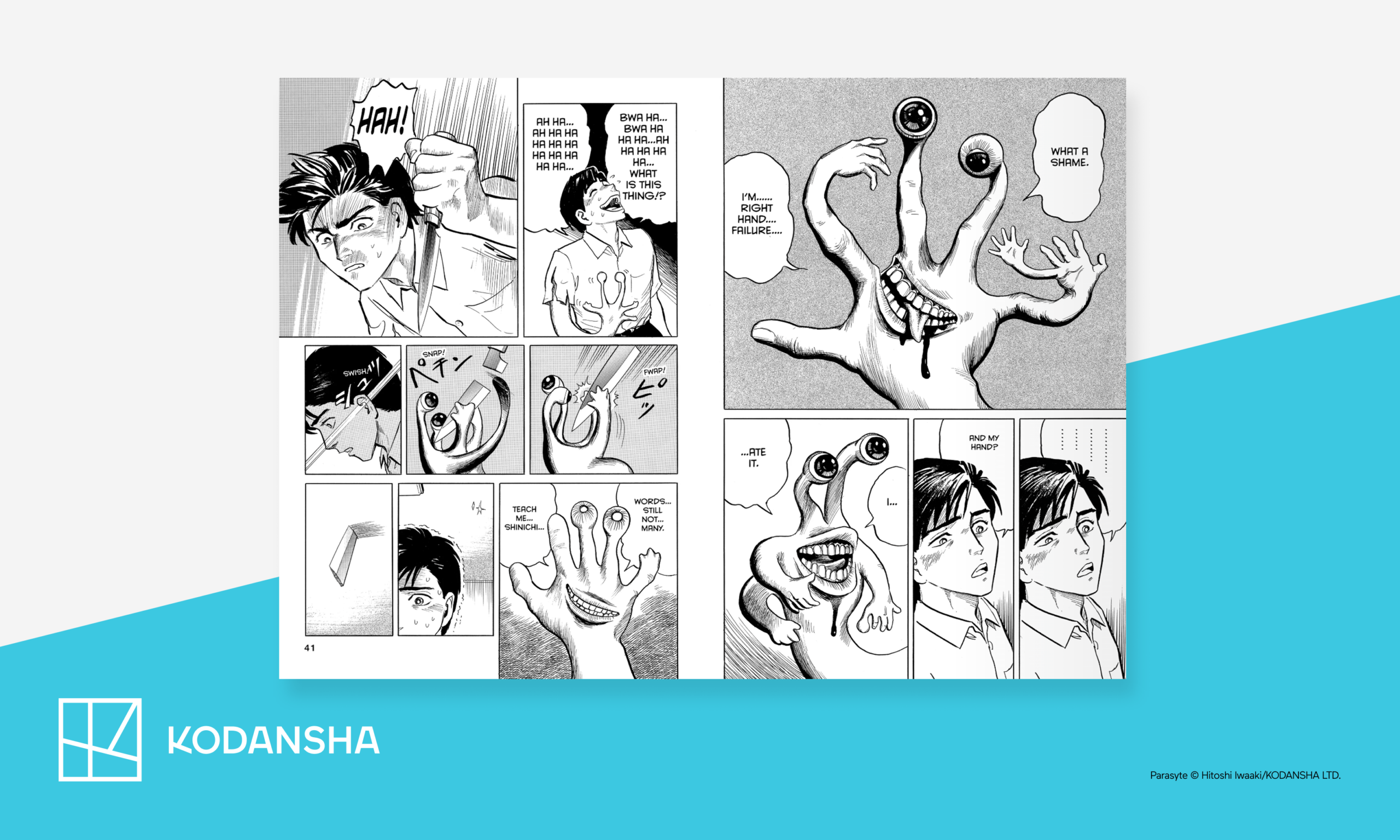
Parasyte centers on Shinichi Izumi, a mild-mannered Japanese high school student whose right hand is taken over by an alien parasite he names Migi—”right” in Japanese. Because Migi is unable to reach Shinichi’s brain—the intended target—he remains stuck in his point of entry, sharing his host’s body but not his thoughts.
The other parasites in the invasion force, those who have successfully colonized human hosts, infiltrate human society—feeding on people and raising questions about their ultimate goals.
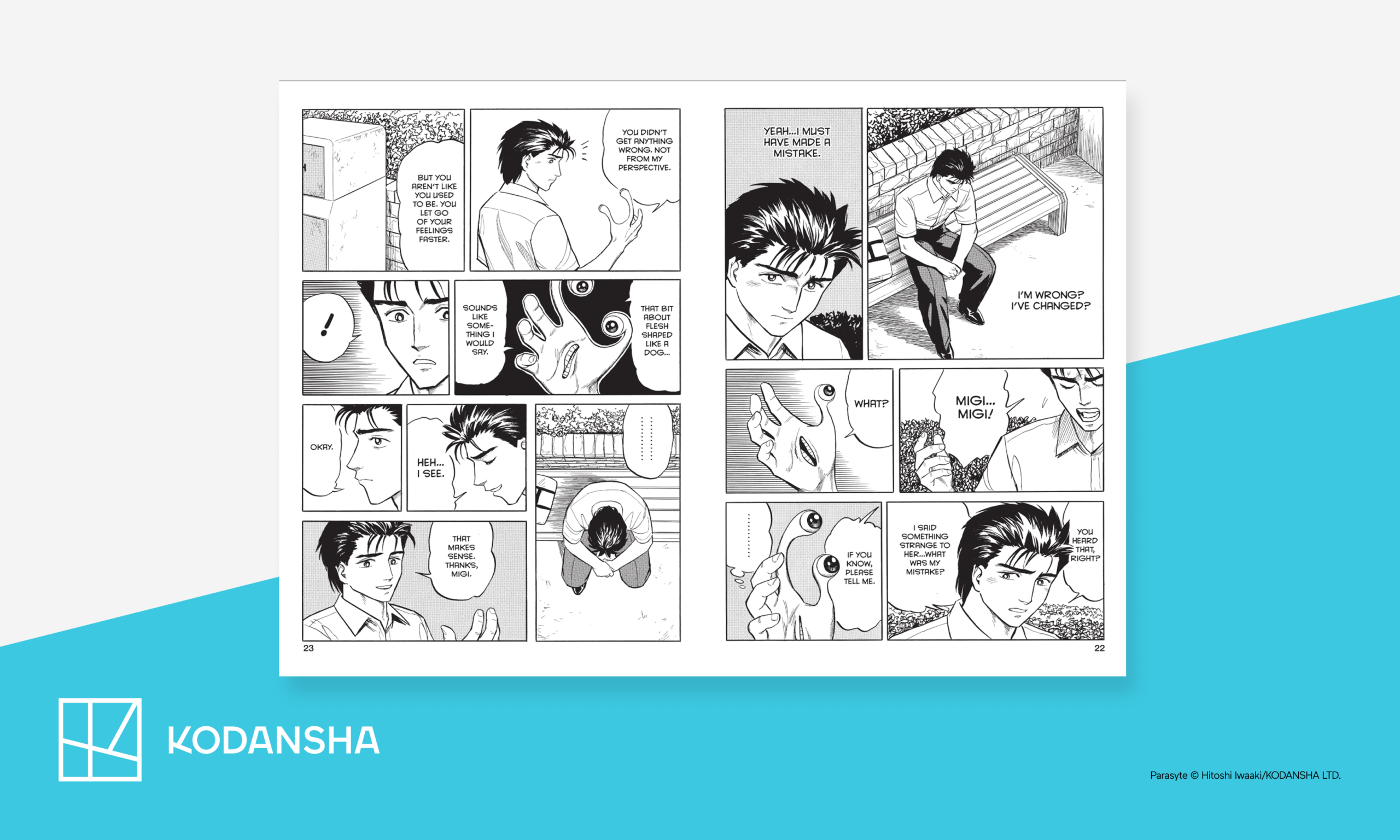
As Migi’s parasitic cells begin to blend into Shinichi’s biology, his capacity for empathy is impacted, and it becomes harder to draw the line between “human” and “other.” Migi starts out as an entirely survival-minded entity: logical and amoral. Yet his attachment to Shinichi develops beyond a simple physical connection. The influence of parasite on human and human on parasite is the tug-of-war at the core of this manga.
“I thought environmental protection was the most important theme in the story. But dealing with the unknown, or with someone who you have a hard time connecting to, may be the more important message today,” Iwaaki says in that same interview with Kodansha USA.
Iwaaki’s Own Invasion (Influence)
In June 2026, a Parasyte exhibition opened in Yokohama, with 200–300 visitors lined up even on weekdays, according to Kodansha’s Gendai Business website. Famous manga artists flocked to the exhibition to see the more than 400 illustrations on display, including Makoto Yukimura, author of Vinland Saga, who casually headed to the exhibit after missing the opening event, only to be told that the event was already at maximum capacity for the day (he was able to get in later).
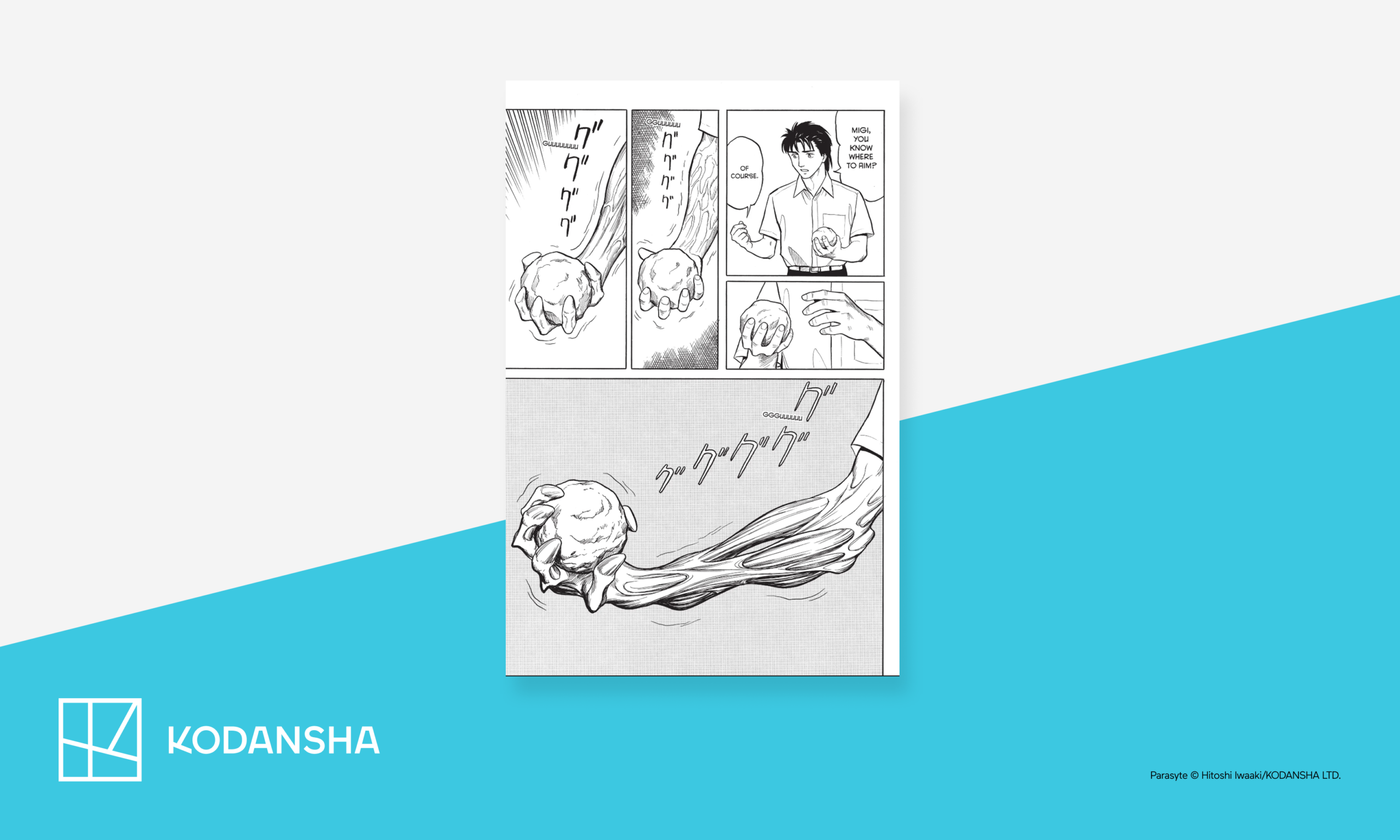
Parasyte‘s cultural footprint expanded further in 2014–15 when Madhouse produced a highly regarded 24-episode anime adaptation, Parasyte: The Maxim, which introduced the story to a new generation globally. A two-part live-action Japanese film followed hot on its heels, and in 2024, Netflix released Parasyte: The Grey, a South Korean live-action series that transplanted the concept to a new setting.
For a manga that was first published nearly 40 years ago, Parasyte has aged astonishingly well. In fact, its central discomfort—the suspicion that the monster might have a point—and the question of what makes someone human are only more relevant now, as humanity outsources more and more of itself to artificial intelligence.
Parasyte and its sequels are available here, the former in both b&w and deluxe full-color editions!